Storyboard: How I Come Up With Children's Stories

I am an image-based writer when it comes to stories for young people (middle-grade).  For "The Girl Who Flew on a Whale," I was inspired by a photoshopped image of a girl touching a floating whale.  That story isn't finished yet, but it will be one day.  

A lot of my stories arise from seeing something that sparks my creative juices.  But sometimes my ideas arise from scenes in novels, which compels me to steal the real-world image, manipulate it, cut it up, throw in some weirdness and fantasy, and then put it all back together again.  Such is the life of "Mr. Pine's Woobly House (And the Mysterious Things Melinda Stone Found There)."  While reading Jean Toomer's Cane, I was inspired by the following lines:
The railroad boss said not to say he said it, but she could live, if she wanted to, on the narrow strip of land between the railroad and the road...Six trains each day rumbled past and shook the ground under her cabin. Fords, and horse- and mule-drawn buggies went back and forth along the road.  No one ever saw her.  Trainmen, and passengers who'd heard about her, threw out papers and food.  Threw out little crumpled slips of paper scribbled with prayers, as they passed her eye-shaped piece of sandy ground.  (Pg. 8-9)
I took that scene and came up with this:

And the following crude drawings of the characters:
If you guessed that Taylor is an aardvark, then you deserve a cookie.  Because he is an aardvark.  Why?  I don't know.  I just wanted an aardvark in this story, and a big house leaning precariously over train tracks, and a crooked-backed old man...

The only thing I will have to change is the name of the old man, since Mr. Pine is the name of a character from a series of famous children's books by Leonard P. Kessler.

The question I have for you all is this:  Are you visually oriented?  If so, how do you use images to construct stories, whether for children or adults?

  • Digg
  • Del.icio.us
  • StumbleUpon
  • Reddit
  • RSS

Misunderstanding the LGBT (QUILTBAG) "Agenda" -- Or Why It's Not "Bigoted"

(I originally posted this on Google+, but since most of you probably don't follow me there, I figured you'd like to read this.  No, I don't cross post everything.  That would be annoying...)

To this day, I still find statements (or logic) such as the following ironically amusing: "I love you, but homosexuality is a sin." It's similar to "I don't support discrimination against LGBT (QUILTBAG) people, but I don't support same-sex marriage."

Such statements point to a failure to understand the other side. To LGBT (QUILTBAG) people, the various issues they are campaigning for, which extend from the right to marry to the various protections afforded to almost everyone else (job protection, protection against abuse, discrimination, violence, etc. etc. etc.), are all Civil Rights. In other words, regardless of what one might think about these people and their "agenda," they believe to the core of their being that this is a Civil Rights movement.

Within that context, can you really blame them for seeing bigots everywhere? From the mindset ofCivil Rights, any contradictory statement like one of the two I listed above would present a bigoted position: that is that saying "I don't support same-sex marriage because I believe it is a sin" is an dogmatic position, the adherence to which links one to bigotry within the context of a Civil Rightsdiscussion.

The fact that LGBT (QUILTBAG) people are right -- it is a Civil Rights movement -- is secondary to understanding why they are so adamant about their beliefs. Some like to say that these folks are just as intolerant as the people they claim to be against, which is little more than linguistic trickery to support a victim mentality. The reality is that almost all (notice the qualification) LGBT (QUILTBAG) people do not believe they have a right to control what you do and do not believe, just that you don't have a right to impose those beliefs on them by denying them the rights and privileges heterosexuals take for granted on a daily basis. At the end of the day, LGBT (QUILTBAG) people aren't trying to take something away from their opponents. Their opponents, however, are -- that's where bigotry finds a home.

  • Digg
  • Del.icio.us
  • StumbleUpon
  • Reddit
  • RSS

Discussion Dept. Vol. 2: Reviewing Yourself and GRRM is Not a Punk

(I should probably change the name for this feature...)

Only two things are "bothering" me this week -- at least, only two things I can talk publicly about.  Let's get right to it:

Complaint #1:  I Give Myself Four Out of Five
It recently came to my attention that a number of authors, small and large, leave reviews on websites like Goodreads of their work.  These aren't self-published hacks (not that all SPers are hacks, just that a lot of the jackasses who do these kinds of activities happen to be SPers), but traditionally published authors.

Even if the "reviews" involve little more than giving oneself a 4-star rating on Goodreads, it is still unethical and borderline immoral.  Rating your own work, even if you claim that you are "being honest," skews the numbers and misrepresents your work to potential readers.  Not only is it not
the author's job to play judgment on their own work, but it dampens the impact of actual reviewers, amateur or professional, who are not connected to the work in question.

How am I, as a reviewer and reader, supposed to take you seriously as an author when you are engaging in low-key forms of distortion, misrepresentation, and deception that less-than-reputable people on Amazon have done in the past?  Writers write the book.  Readers and critics interpret it -- either for its "value" as a literary product or for its "messages."

Complaint #2:  Punk Fantasy?  Ha!
Over at Tor.com, Ryan Britt attempts to associate Lev Grossman and George R. R. Martin with the punk aesthetic.  An amusing quote:

Millhauser doesn’t claim to be rebelling against anything, and it seems Martin isn’t either. Perhaps a real punk wouldn’t call themselves a punk, but the notion of protesting an institutionalized notion of art is likely a result of some amount of stigma or shame associated with the (punk) choice. Someone with a literary background like Grossman is going to be faced with more stigma or shame when he goes genre than someone like George R. R. Martin when he pulls a slightly punk move in Game of Thrones by not having it necessarily be about a big bad guy or quest. Perhaps Martin never faced the stigma, so the “risks” he took seem less punk than Grossman.  
Genre fiction that is, well, very genre-y, isn’t inherently a punk response to literature. Only when the crossovers occur do things begin to feel that way. I always like to say that growing up with no genre biases allowed for me to read nearly everything. A background in science fiction and fantasy narratives can actually allow a reader to jump into any story that may have a historical or social context they be unfamiliar with. In my case, historical fiction is a snap after you’ve read Dune. But I don’t think Frank Herbert was a punk, because he never really had, to my knowledge, switch from a mainstream literary context. Neither did Tolkien.
I am always amused when someone tries to pigeonhole people into some oversimplified version of "punk"ism that historically inaccurate movies, books, comics, and TV shows created when the punk movement collapsed under its own anti-establishment momentum.  In actuality, the punk movement was never as simple as "rebelling" against a community standard because punks never owned rebellion.  People have been finding ways to rebel against standardized culture for centuries, both actively and passively.  What separates the punk movement from most of these rebellious moments is the kind of rebellion they provided.  They weren't just anti-establishment.  They were anarchists, socialists, anti-militarism, anti-capitalism, anti-socialists, anti-X, anti-Y, and anti-Z.  Punks were neo-Nazis, conservatives, liberals, communists, but also anti all of these things.  They were walking contradictions of pure individuality.  It was a movement that was always doomed.

Today, the punk movement no longer exists.  Not in any significant way.  What punk has become is little more than an establishment of its own.  Rebellion, if we take Britt's term, became a community brand and the aesthetic of punk -- the anti-everything, including an anti of anti-ness.  To say it again:  punk as an actual aesthetic is dead, and the exceptions only prove the rule.

And when you think about how dead punk has become -- so dead it has crossed over from undead to deader-than-dead -- you really can't make arguments like the above, where authors are "rebelling" against a fantasy literature standard.  Nothing about GRRM's writing smells of punkness.  Nothing about Grossman or Millhauser connects to a punk aesthetic either.  Crossing the literary divide or seemingly challenging fantasy conventions doesn't mean you are enacting a punk attitude.  It means you are navigating a literary "world."  And genre writers have been navigating that world for the better part of a century (so too have literary writers, in different ways).

All these writers are doing are things that have been done before -- things that our short-term collective memory has forgotten.  The difference is that these writers, for one reason or another, have caught on for now.  But doing different things in genre -- imaginary different, that is -- is no more punk than deciding not to eat five servings of veggies today.  True punk-ness in literature is almost impossible to find or write, in part because non-conformity always becomes a conformist position -- you are not a punk unless you become a punk.  This is why William Gibson's work is only punk in its historical moment; in retrospect, it is little more than the beginning of a trend -- an anti-punk-ism that makes its bed with a salable aesthetic.

---------------------------------------------------

What about you?  Anything strange or annoying happen in your neck of the woods?  Want to talk about it?

  • Digg
  • Del.icio.us
  • StumbleUpon
  • Reddit
  • RSS

RIP: Sara Douglass (a.k.a. Sara Warneke)

Sad news from Locus:

Australian author Sara Warneke, 54, who wrote bestselling fantasy novels as Sara Douglass, died September 26, 2011 of cancer.
She had been diagnosed with ovarian cancer last year and lost her battle earlier today.

While I have not read much of her work, I know that the SF/F community will miss her terribly, not just as a person, but also as a writer.  It is a sad day when we lose one of our own and I wish the best for those she left behind.  My condolences to her friends and family.  May she live forever through her work.

  • Digg
  • Del.icio.us
  • StumbleUpon
  • Reddit
  • RSS

SandF Episode 5.5 (Torture Cinema Meets 2012) is Live!

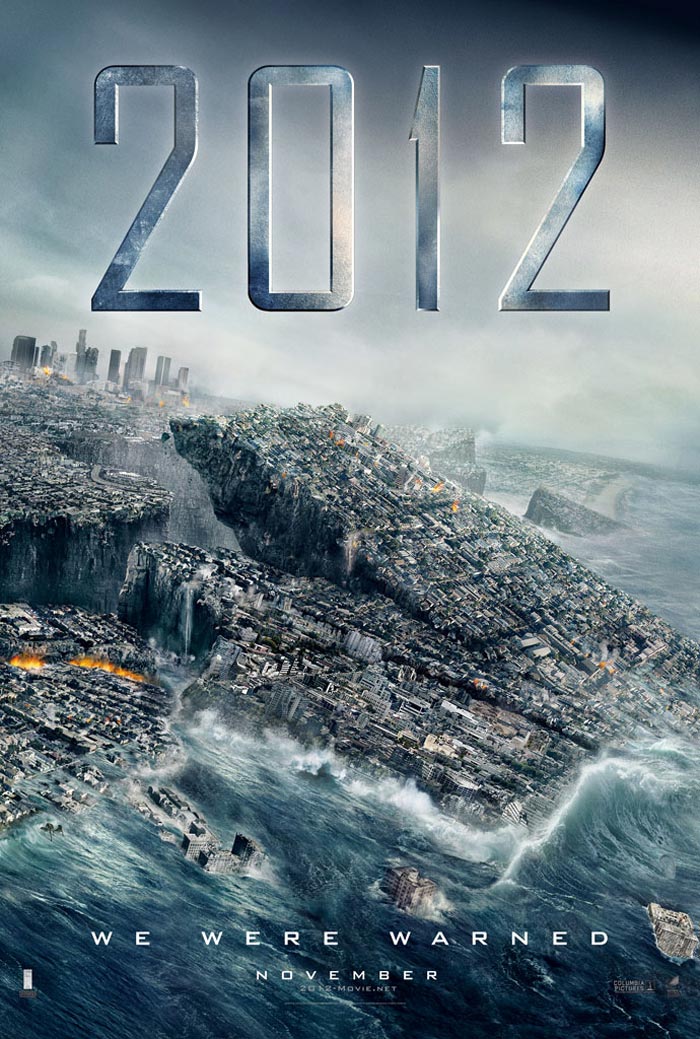
The new episode is here!  This week, Jen and I take the awful apocalypse movie 2012.  And it's really bad.  Really.  Trust us...we've been watching crappy movies for a while.

Wait?  It's not as bad as we thought it would be, but still pretty bad?  Oh...

Anyway.  If you'd like to hear what we have to say about this darned flick, go download the mp3 or follow us on iTunes!

  • Digg
  • Del.icio.us
  • StumbleUpon
  • Reddit
  • RSS

Literary Space Opera: Does it or can it exist?

I've been mulling over the idea of writing a space opera, tentatively titled The Reorientation War.  One of the things that strikes me about space operas is the epic scope; much like epic fantasies, space opera offers an immense field in which to play.  For me, that means a lot of people, a lot of places, a lot of social, political, and physical conflict, and a lot of action.  And with The Reorientation War, I'm hoping to sidestep the hero paradigm and opt instead for a more brutal, realistic vision of how an interstellar human empire might function.

But through the course of considering space opera as a genre, I've started to wonder about form.  Is there such a thing as literary space opera?  Or do writers of space opera adopt the adventurous landscape established by early SO writers, and, thus, take on its contemporary "popular prose" style?

The reason I ask these question is because I consider literary fiction to be more formally oriented than other genres.  That is that literary fiction, for me, places an extraordinary amount of attention on the language and the interrelationship of parts, which may or may not leave room for a linear plot.  Since much of space opera seems oriented towards plot-oriented conflict, it seems to me that much of the SO genre is potentially antithetical to the "literary."

A great deal of what we associated with SO borrows liberally from the same sources as Star Wars
and Star Trek.  Traditional hero models.  Traditional plots.  That's not to say that these are uninteresting or uninspiring elements -- heroes, to me, are valuable commodities in literature.  Rather, what I'm trying to suggest is that the distinction between literary and non-literary is utterly formal, in which non-literary work tends to borrow from those mythical sources we've come to know and love.  This is precisely because those forms -- the hero and his journey -- work.  We love heroes.  We love quests and journeys and excitement, and we equally love galactic empires and space battles and the intrigue that SO has tended to offer.

But can you still write an SO novel if you're missing some of these elements?  If you're not telling a story about heroes, per se, but about complex human relationships in a setting of empire a la Star Wars, can the story you are writing still be considered SO, or does it become something else entirely?

Honestly, I think it remains SO, but only because I think what I am associating with SO here is inaccurate, in part because there is this thing called New Space Opera and in part because SO is a complex genre.  But I still can't think of any SOs which one might call literary.  Perhaps I missed them.  If so, let me know in the comments.  Because now I'm throwing the question at all of you...

---------------------------------------------------

To clarify some of the above:  I am not talking about literary as "respectable."  I think that's a bogus and elitist definition of any genre, popular or otherwise.  Non-literary fiction -- that is, fiction which is more plot oriented and pays less attention to the language and interconnected structures via metaphor, etc. -- is just as valuable and fascinating as literary fiction.  I would not call Tobias S. Buckell or Nalo Hopkinson "literary writers," but I would consider their works just as, if not more, valuable as/than anything written in any other genre.

(I blame Adam Callaway for all of the above.)

  • Digg
  • Del.icio.us
  • StumbleUpon
  • Reddit
  • RSS

Discussion Dept Vol. 1: Heinlein, Vietnam Drinking Games, Sony, and Stupid Arguments About SF

Every once in a while I feel like complaining about a few things instead of engaging the issues in a more sustained manner.  Usually I don't blog about such complaints (which sometimes aren't complaints so much as confusions or general "mehness").

And that's why I've created the Complaint Department Discussion Department feature:  to give me a little space to complain or babble about a few things without sustained thought (or to point out stupid things people say and do in the SF/F community).

Here goes:

Complaint #1 -- Connie Willis and the Heinlein Award
She won it.  Alright.  That's fine.  I haven't read most of her work (though Jason Sanford tells me her latest novels aren't very good).  But then you read the mission statement of the Heinlein Award and the red flags go up:  "For outstanding published works of science fiction and technical writings to inspire the human exploration of space."

I'm sorry?  What do Blackout or All Clear have to do with that?  Nothing, you say?  Then why did she win this particular award?  That's like giving a major league baseball player an award for MVP in the Superbowl.    He might be a great athlete, but the award is way outside his field.

Does anyone have any insight on this?  Did Willis write a short story set in space that changed the SF game or something?

Complaint #2 -- The SF Writer Vietnam Drinking Game
Here's how it works:

  • Name as many science fiction or fantasy writers from before the 1980s in two minutes.
  • Compare your list to the image provided below.  
  • For every person you named who is on the left, take a shot.  
  • For every person on the right that you should have named, take a shot.  
  • For every person on the left whose presence you are shocked by, take a shot.
You see where this is going, right?  Drink yourself into such a terrible stupor that the below image is wiped from your mind forever...

Complaint #3 -- Sony to Ban Users Who Refuse to Waive Right to Sue
Because no corporation is immune to acting like a total and utter dickhole, Sony is apparently making it a requirement to waive your right to sue them if there is a security breach. If you don't sign the new ToS? You get banned.

That's right: you will not be allowed to use their system unless you agree not to sue them in the event that your credit card and other sensitive information are acquired because their security system wasn't good enough to fend off hackers. Who wants to bet that in a few years they'll stop putting so much money into security?

Thanks, Sony. You've just lost a customer for life.

(Note: The new ToS does allow you to go through arbitration, but this is done via an arbitrator selected by Sony. How many red flags does someone in HR need at Sony to realize this is a really dickhole idea?)

Complaint #4 -- Science Fiction is About the Future
You know, that stupid argument that people make about SF that completely handicaps the genre by claiming it is about something it can't fulfill, no matter how good the writer may be.  I've babbled about this topic before.  In two parts.  I don't deny that a lot of the classic SF authors (and perhaps most of them today) believed they were predicting the fortune by writing SF, but using that as a basis for saying that the genre is about extrapolation (as opposed to saying extrapolation is sometimes a part of the form) is sort of like saying you buy your friend's argument when he says "I only eat apples" while munching on an orange.

SF is always about the present (with rare exception -- and, as we know, exceptions prove the rule).  This annoying focus on extrapolation does nothing but make the genre look like a silly game of "guess who."  Who cares if jetpacks came true?  We got space shuttles, advanced medical technology, and smart phones instead.  Who cares whether a prediction is "accurate?"  Asking such questions seems absurd to me.  The future is unattainable the further you move away from the now.  Let's worry about realistic stuff, like what tomorrow will look like and how we can make it better.  You don't need SF to do that for you.

-------------------------------------------------

That's what I've got.  What about you? What has been bugging you this week?

  • Digg
  • Del.icio.us
  • StumbleUpon
  • Reddit
  • RSS